
Belgium has a creative side worth exploring
Belgium is often associated with medieval squares, comic-book characters, Art Nouveau, chocolate and beer. Those traditions remain central to the visitor experience, but they are only part of the country’s visual culture. In cities such as Antwerp, Brussels, Ghent and Liège, walls, underpasses and former industrial spaces also tell stories through graffiti and street art. For travelers who enjoy seeing a city through contemporary culture rather than only through its most photographed landmarks, this urban layer can add a very different dimension to a weekend away.
Graffiti is particularly interesting because it is both a local expression and an international visual language. Lettering styles, characters, colour choices and large painted walls can vary from one neighbourhood to another, while the techniques are recognizable to anyone interested in street culture. A city break built around this kind of creative experience can therefore move beyond sightseeing: instead of only looking at public art, visitors can learn how it is designed and made.
Why graffiti fits a Belgian city trip
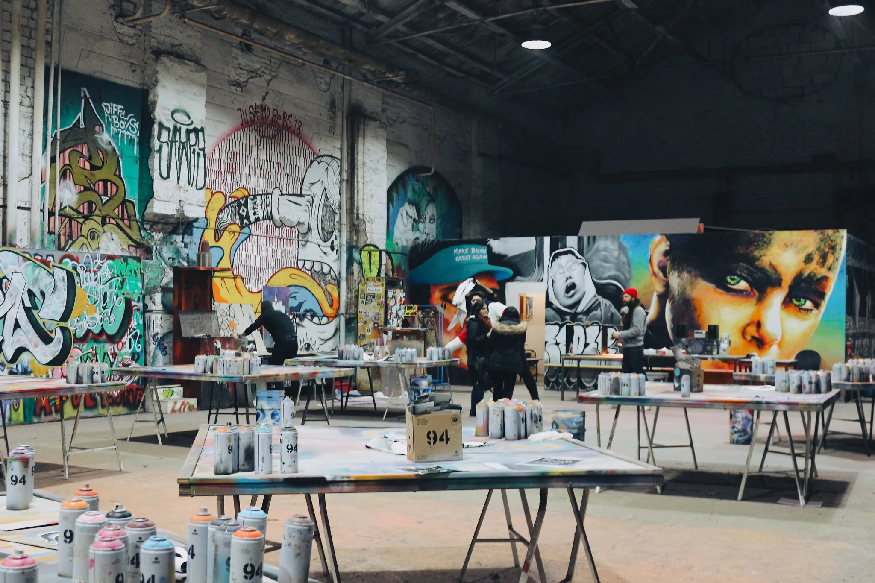
A graffiti workshop works well as a travel activity because it gives a group a reason to slow down and participate. The typical structure begins with an introduction to graffiti and its history, followed by a design or sketching stage on paper. Participants then learn how spray cans work, practise basic techniques and colours, and develop an artwork on a panel or shared surface under the guidance of an artist. Workshops-Graffiti.be describes this progression as part of its Belgian workshop format, with materials, instruction and practical spray techniques included. Its Belgian graffiti workshops are available across the country rather than being limited to a single tourist district. This makes the activity easier to fit into different itineraries and group types.
The participatory element is also useful for groups with mixed interests. Not everyone wants to spend an entire day inside a museum, while not every traveler is looking for a demanding outdoor activity. Graffiti sits somewhere between art, culture and entertainment. Beginners can concentrate on lettering and colour, more experienced participants can experiment with outlines, shadows and effects, and the group can still finish with something tangible rather than simply moving on to the next attraction.
Antwerp: a natural starting point for urban creativity
For many visitors, Antwerp is one of the most interesting Belgian cities in which to combine architecture, fashion, food and contemporary urban culture. The city’s industrial history and strong visual identity make graffiti and street art feel particularly at home among warehouses, railway infrastructure and regenerated neighbourhoods. A visitor can spend part of the day exploring the historic centre and then shift toward a more contemporary setting without feeling as though the two experiences belong to completely separate trips.
Read More: A Gift for the Girl Who Knows All My Stories: A Journey of Friendship Wrapped in Gold
A practical option for travelers is to build a creative activity into an Antwerp itinerary rather than treating it as a separate excursion. A local workshop can become a two-hour break between sightseeing, shopping and dinner, or the central activity of a group weekend. The current Antwerp programme offered by Workshops-Graffiti.be includes guidance in spray techniques, colour combinations and the creation of a personal graffiti artwork, with options for groups, schools, celebrations and other visitors.
Brussels and Ghent: different city characters, similar creative potential
Brussels offers a different urban atmosphere, with a long tradition of murals, illustration and public art alongside its political and architectural landmarks. For a traveler, the appeal is the contrast. A morning spent around the Grand-Place and central neighbourhoods can be followed by an activity that focuses on making rather than observing. That change of pace can be particularly effective on a short city break, where every part of the itinerary needs to feel distinct.
Ghent has its own balance of historic streets and contemporary culture. The city is well known for its medieval centre, canals and youthful atmosphere, but its creative character extends beyond the postcard views. A graffiti workshop can fit naturally into this setting because it turns visual culture into an activity. Rather than asking visitors to understand a city only through monuments, it lets them explore a different form of local and international artistic expression.
Liège and Wallonia: adding graffiti to a different kind of weekend
Travelers heading toward Wallonia can also combine a graffiti experience with a weekend in places such as Liège or the wider Ardennes. Here the contrast between urban culture and the surrounding landscape can be especially appealing. The day does not have to revolve entirely around city sightseeing: a group might explore Liège, continue into the region, and use a creative workshop as one of the shared activities that gives the trip its own identity.
This flexibility matters for Belgian travel because many groups are not planning a conventional city break. Families, friends, school groups and company teams may already have transport, accommodation and several stops arranged. A workshop can be inserted into that existing structure and adapted to the destination. Workshops-Graffiti.be currently states that its Belgian activities can be organised in cities across the country and in all Belgian provinces, which makes the concept suitable for itineraries outside the most obvious tourist centres.
What visitors actually learn during a graffiti workshop
One reason these experiences work well for travelers is that the process is more structured than simply picking up a spray can. Participants first have to think about letters, shapes and composition. They then discover how distance, movement and pressure change the spray pattern. Caps can produce different line widths, while layering, colour transitions and outlines help turn a simple sketch into something that reads as a finished piece.
For a beginner, the most useful part is often the moment when the spray can stops feeling unpredictable. A participant can see how a controlled movement creates a clean line, how a faster movement produces a lighter mark and how overlapping colours changes the visual result. These small technical discoveries make the final artwork more meaningful because the participant understands at least part of the process behind it.
A better souvenir than another photograph
Travel souvenirs are usually objects bought after an experience. A graffiti workshop reverses that idea: the souvenir is created by the traveler during the experience itself. A finished panel, name piece or collaborative artwork becomes a physical reminder of the trip, and its imperfections are often part of the story. For groups, a shared piece can be even more memorable because it records the contribution of several people rather than one person’s purchase.
That makes graffiti particularly suitable for repeat visitors and travelers who are looking for something less conventional. Belgium has no shortage of museums, historic sites and culinary experiences, but creative participation adds another layer. It connects the destination with the visitor’s own actions, which is one reason workshop-based tourism continues to appeal to travelers who want to do something rather than simply see something.
Planning a graffiti experience in Belgium
The easiest approach is to choose the city or region first and then place the creative activity around the rest of the itinerary. Antwerp works well for a compact urban weekend, Brussels suits a central city break, Ghent combines heritage and contemporary culture, while Liège and the Ardennes can work for groups who want to mix urban and outdoor experiences. Group size is another practical consideration, especially when coordinating families, school groups or corporate travel.
Read More: How To Get Rid Of An Oily Scalp Effectively?
It is also worth allowing enough time for the whole process rather than calculating only the actual spray-painting period. A typical workshop includes an introduction, sketching, technical instruction, creation and finishing. According to the current Belgian programme, most workshops last around 1.5 to 2 hours, although formats can be adapted. Planning the activity as a complete experience rather than a quick stop helps the group get more from the creative side of the trip.
Belgium seen through a different lens
Belgium’s historic cities already provide an exceptionally dense cultural itinerary, but graffiti and street art reveal another side of the country. They show how public space can become a canvas and how international street culture can take on local character. For travelers who want a city break to feel personal rather than interchangeable, a hands-on graffiti activity is a simple way to experience that contemporary layer.
The real appeal is not simply learning to spray paint. It is the combination of place, people and making something together. A Belgian trip that includes graffiti can connect the visual language of the street with the architecture, neighbourhoods and stories of the destination, leaving visitors with both a new skill and a souvenir they actually helped create.