
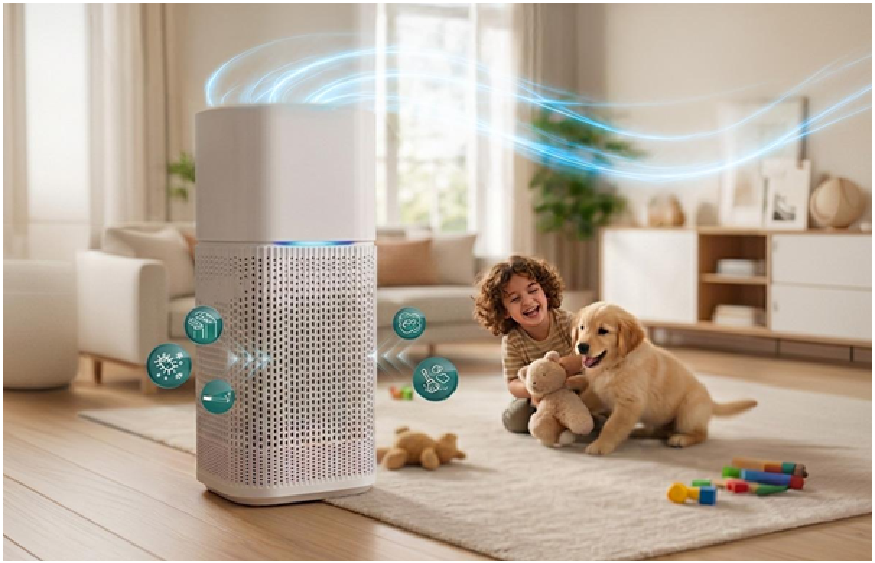
Indoor air quality has become a growing concern for many households, especially in major cities such as Delhi, Mumbai, Kolkata, and Lucknow, where air quality levels often range from poor to severe. As a result, many people are spending more time indoors. However, outdoor pollutants such as particulate matter and volatile organic compounds, along with indoor pollutants generated from everyday activities like cooking, can still affect indoor air quality.
This has encouraged many households to invest in a room air purifier to help create a cleaner and healthier indoor environment.
However, choosing the right purifier requires careful consideration of several important factors before making a purchase. Let’s learn more about them.
1. Filtration System
The filtration system is one of the most important parts of any room air purifier because it directly determines how effectively pollutants are removed from indoor air. Multi-stage filtration systems consisting of pre-filters, HEPA filters, and activated carbon filters target different types of contaminants simultaneously.
Read More : Understanding the Costs and Tools for Estate Cleanouts A Comprehensive Guide
Pre-filters help capture larger particles such as dust and hair, while HEPA filters are designed to remove extremely fine airborne particles. Activated carbon layers help in reducing smoke, cooking odours, and certain gaseous pollutants from indoor air.
2. CADR Rating and Room Coverage
The clean air delivery rate, commonly known as CADR, is one of the most reliable indicators of an air purifier’s performance. It measures how efficiently a purifier can remove airborne contaminants from a room within a certain period. A room air purifier with a higher CADR can generally clean indoor air more quickly and maintain better air circulation.
However, the effectiveness of a purifier also depends on the room size. A small purifier placed in a large living room may struggle to maintain consistent air quality despite having advanced filtration features.
3. Noise Levels and Everyday Comfort
Since air purifiers are used for long hours, excessive fan noise can become distracting, especially in bedrooms, study areas, or workspaces. Many modern purifiers include sleep modes that allow continuous air purification while minimising sound levels during the night.
4. Energy Efficiency and Long-Term Use
Air purifiers often operate continuously, making energy efficiency an important factor for long-term use. An energy-efficient air purifier with adjustable fan speeds and automatic shut-off functions can help maintain cleaner indoor air without significantly increasing electricity costs.
5. Filter Maintenance
Over time, filters become clogged with dust, allergens, and pollutants, reducing airflow and purification efficiency. Timely cleaning or replacement of filters helps maintain good indoor air quality.
A properly maintained air filter for the home not only improves purification performance but also extends the lifespan of the device itself.
6. Smart Features and User Convenience
Smart technology has added greater convenience to modern air purifiers. Many models now include app-based controls, remote operation, scheduling features, and compatibility with voice assistants. These functions allow users to operate a room air purifier more efficiently according to their daily routines.
Conclusion
A room air purifier can make a significant difference by helping reduce airborne pollutants, allergens, smoke particles, and unwanted odours. However, effective purification depends more on practical performance factors than on marketing claims.
Read More : Is Copper-Infused Water from Purifiers Safe for Daily Drinking?
Features such as high-quality filtration, appropriate room coverage, energy efficiency, and maintenance requirements play a much larger role in delivering reliable performance. By focusing on the features that genuinely improve indoor air quality, households can make more informed decisions that support healthier and more comfortable living spaces.